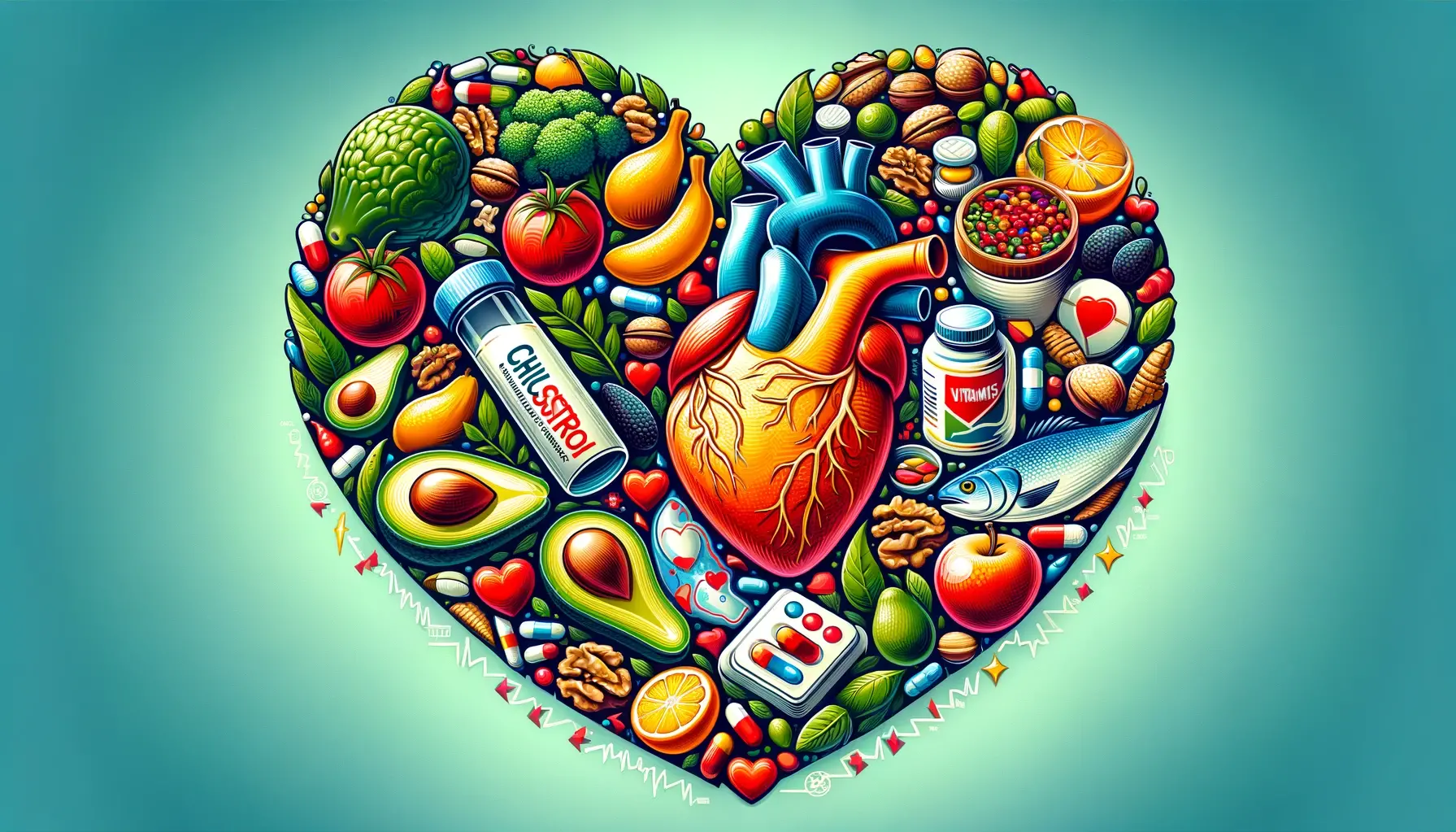

Are you concerned about your cholesterol levels and looking for natural ways to lower them? Look no further, as this article unveils the most effective vitamins that can help reduce your bad cholesterol levels. With the power of these vitamins, you can take control of your health and improve your overall well-being. So, let’s explore these incredible natural remedies that can make a significant difference in your cholesterol levels.
Vitamin B3 (Niacin)
Niacin, also known as Vitamin B3, is a powerful nutrient that can have a positive impact on your cholesterol levels. It has been shown to lower LDL cholesterol levels, which is the “bad” cholesterol that can contribute to heart disease. By lowering LDL levels, niacin helps to reduce the risk of developing heart disease.
In addition to lowering LDL cholesterol levels, niacin also raises HDL cholesterol levels. HDL cholesterol is often referred to as the “good” cholesterol because it helps to remove LDL cholesterol from the bloodstream and carry it back to the liver where it can be broken down and eliminated from the body. By increasing HDL cholesterol levels, niacin helps to improve the overall cholesterol profile.
Furthermore, niacin has the ability to reduce triglyceride levels. Triglycerides are a type of fat found in the blood, and high levels of triglycerides have been linked to an increased risk of heart disease. By lowering triglyceride levels, niacin helps to lower the overall risk of heart disease.
The recommended dosage of niacin varies depending on the individual and their specific needs. It is important to speak with your healthcare provider to determine the appropriate dosage for you. In some cases, niacin may be prescribed at higher doses to specifically target cholesterol levels, but it is always important to follow your doctor’s instructions and monitor your cholesterol levels regularly.
Vitamin C
Vitamin C is well-known for its role in supporting the immune system and fighting off colds and flu, but it also has benefits for cholesterol levels. One of the ways vitamin C can help lower bad cholesterol is by acting as an antioxidant. Antioxidants help to protect the body against damage caused by free radicals, which are unstable molecules that can lead to oxidative stress. By reducing oxidative stress, vitamin C can help to reduce LDL cholesterol oxidation, which is a key step in the development of heart disease.
In addition to its antioxidant properties, vitamin C has been found to increase HDL cholesterol levels. As previously mentioned, HDL cholesterol is the “good” cholesterol that helps to remove LDL cholesterol from the bloodstream. By increasing HDL levels, vitamin C helps to improve the overall cholesterol profile and reduce the risk of heart disease.
Another benefit of vitamin C is its ability to enhance nitric oxide production. Nitric oxide is a molecule that helps to relax and dilate blood vessels, promoting healthy blood flow. By increasing nitric oxide production, vitamin C improves blood vessel function, which can have a positive impact on cholesterol levels and overall cardiovascular health.

Vitamin D
Vitamin D, often referred to as the “sunshine vitamin,” is essential for overall health and has benefits for cholesterol levels as well. One of the ways vitamin D can help lower LDL cholesterol levels is by reducing the activity of an enzyme called HMG-CoA reductase, which is responsible for cholesterol production in the body. By inhibiting this enzyme, vitamin D helps to lower LDL cholesterol levels.
In addition to reducing LDL cholesterol levels, vitamin D has also been found to reduce triglyceride levels. High triglyceride levels are associated with an increased risk of heart disease, so by lowering triglycerides, vitamin D helps to lower the overall risk of developing heart disease.
Furthermore, vitamin D has been shown to improve blood vessel function. Healthy blood vessels are essential for optimal cardiovascular health, and by improving blood vessel function, vitamin D can help to reduce the risk of developing heart disease.
It is important to note that vitamin D is primarily synthesized by the body through exposure to sunlight. However, some individuals may have difficulty synthesizing enough vitamin D, especially those who live in northern latitudes or have limited sun exposure. In these cases, supplementation may be necessary to ensure adequate vitamin D levels. It is recommended to consult with your healthcare provider to determine the appropriate dosage of vitamin D for you.
Vitamin E
Vitamin E is a potent antioxidant that can have a positive impact on cholesterol levels. One of the key ways vitamin E can benefit cholesterol levels is by preventing the oxidation of LDL cholesterol. When LDL cholesterol becomes oxidized, it becomes more likely to contribute to the development of plaque in the arteries. By preventing this oxidation, vitamin E helps to reduce the risk of plaque formation and the associated risk of heart disease.
Additionally, vitamin E has been found to increase HDL cholesterol levels. As mentioned previously, HDL cholesterol is the “good” cholesterol that helps to remove LDL cholesterol from the bloodstream. By increasing HDL levels, vitamin E helps to improve the overall cholesterol profile and reduce the risk of heart disease.
It is worth noting that while vitamin E supplementation can be beneficial for some individuals, it is always important to consult with your healthcare provider before starting any new supplements. High doses of vitamin E can be associated with an increased risk of bleeding in some individuals, so it is important to ensure that the dosage is appropriate for you.

Vitamin K2
Vitamin K2 is a lesser-known nutrient that plays an important role in cardiovascular health. One of the key benefits of vitamin K2 is its ability to help prevent calcium deposits in arteries. When calcium deposits build up in the arteries, it can lead to the development of plaque, which can increase the risk of heart disease. By helping to prevent these calcium deposits, vitamin K2 helps to reduce the risk of plaque formation and maintain optimal cardiovascular health.
In addition to preventing calcium deposits, vitamin K2 has also been found to reduce the risk of heart disease. Several studies have shown that higher vitamin K2 intake is associated with a reduced risk of cardiovascular events such as heart attack and stroke, making it an important nutrient for maintaining heart health.
Furthermore, vitamin K2 has been found to improve LDL cholesterol metabolism. By improving the metabolism of LDL cholesterol, vitamin K2 helps to reduce the risk of LDL cholesterol contributing to the development of plaque in the arteries.
It is important to note that vitamin K2 is not commonly found in the typical Western diet. Good dietary sources of vitamin K2 include fermented foods such as sauerkraut and natto, a traditional Japanese dish made from fermented soybeans. Alternatively, vitamin K2 supplements are available for those who may have difficulty obtaining adequate levels through their diet alone.
Omega-3 Fatty Acids
Omega-3 fatty acids are a type of healthy fat that has been well-known for its cardiovascular benefits. One of the key ways omega-3 fatty acids can help lower bad cholesterol is by reducing LDL cholesterol levels. By lowering LDL levels, omega-3 fatty acids help to reduce the risk of plaque formation and the associated risk of heart disease.
In addition to lowering LDL cholesterol levels, omega-3 fatty acids have also been found to increase HDL cholesterol levels. As previously mentioned, HDL cholesterol is the “good” cholesterol that helps to remove LDL cholesterol from the bloodstream. By increasing HDL levels, omega-3 fatty acids help to improve the overall cholesterol profile and reduce the risk of heart disease.
Furthermore, omega-3 fatty acids have been found to lower triglyceride levels. High triglyceride levels are associated with an increased risk of heart disease, so by lowering triglycerides, omega-3 fatty acids help to lower the overall risk of developing heart disease.
Good dietary sources of omega-3 fatty acids include fatty fish such as salmon, mackerel, and sardines. Alternatively, omega-3 supplements are available for those who may not consume enough omega-3 fatty acids through their diet alone.

Biotin
Biotin, also known as Vitamin B7, is a lesser-known nutrient that has benefits for cholesterol levels. One of the key ways biotin can help lower bad cholesterol is by lowering total cholesterol levels. By reducing total cholesterol levels, biotin helps to reduce the risk of developing heart disease.
In addition to lowering total cholesterol levels, biotin has also been found to reduce LDL cholesterol levels. LDL cholesterol is the “bad” cholesterol that can contribute to the development of plaque in the arteries. By reducing LDL levels, biotin helps to reduce the risk of plaque formation and the associated risk of heart disease.
Additionally, biotin has been found to increase HDL cholesterol levels. As mentioned earlier, HDL cholesterol is the “good” cholesterol that helps to remove LDL cholesterol from the bloodstream. By increasing HDL levels, biotin helps to improve the overall cholesterol profile and reduce the risk of heart disease.
Good dietary sources of biotin include egg yolks, nuts, seeds, and legumes. Alternatively, biotin supplements are available for those who may not consume enough biotin through their diet alone.
Garlic Extract
Garlic extract is a popular natural remedy with a range of health benefits, including its effects on cholesterol levels. One of the key benefits of garlic extract is its ability to lower total cholesterol and LDL cholesterol levels. LDL cholesterol is the “bad” cholesterol that can contribute to the development of plaque in the arteries. By lowering LDL levels, garlic extract helps to reduce the risk of plaque formation and the associated risk of heart disease.
In addition to lowering LDL cholesterol levels, garlic extract has also been found to increase HDL cholesterol levels. HDL cholesterol is the “good” cholesterol that helps to remove LDL cholesterol from the bloodstream. By increasing HDL levels, garlic extract helps to improve the overall cholesterol profile and reduce the risk of heart disease.
Furthermore, garlic extract has been found to inhibit cholesterol synthesis. Cholesterol synthesis is the process by which the body produces cholesterol, and by inhibiting this process, garlic extract helps to lower cholesterol levels and reduce the risk of developing heart disease.
Garlic extract can be consumed in a variety of forms, including fresh garlic, garlic powder, or as a supplement. It is important to note that if you choose to take garlic extract supplements, it is essential to follow the dosage instructions and consult with your healthcare provider to ensure proper usage.
Nattokinase
Nattokinase is an enzyme derived from a traditional Japanese food called natto, which is made from fermented soybeans. It has gained popularity in recent years for its potential benefits on cardiovascular health, including its effects on cholesterol levels. One of the key benefits of nattokinase is its ability to reduce LDL cholesterol levels. LDL cholesterol is the “bad” cholesterol that can contribute to the development of plaque in the arteries. By reducing LDL levels, nattokinase helps to reduce the risk of plaque formation and the associated risk of heart disease.
In addition to reducing LDL cholesterol levels, nattokinase has also been found to increase HDL cholesterol levels. HDL cholesterol is the “good” cholesterol that helps to remove LDL cholesterol from the bloodstream. By increasing HDL levels, nattokinase helps to improve the overall cholesterol profile and reduce the risk of heart disease.
Furthermore, nattokinase has the ability to thin the blood and improve circulation. By thinning the blood, nattokinase helps to prevent the formation of blood clots and improve blood flow, which is essential for optimal cardiovascular health.
Nattokinase is available in supplement form and can be taken to support heart health. It is important to consult with your healthcare provider before starting any new supplements to ensure proper usage and dosage.
Coenzyme Q10 (CoQ10)
Coenzyme Q10, also known as CoQ10, is a naturally occurring compound that plays a vital role in energy production within the cells. It is also known for its benefits for cholesterol levels. One of the key benefits of CoQ10 is its ability to reduce LDL cholesterol levels. LDL cholesterol is the “bad” cholesterol that can contribute to the development of plaque in the arteries. By reducing LDL levels, CoQ10 helps to reduce the risk of plaque formation and the associated risk of heart disease.
In addition to reducing LDL cholesterol levels, CoQ10 has been found to increase HDL cholesterol levels. HDL cholesterol is the “good” cholesterol that helps to remove LDL cholesterol from the bloodstream. By increasing HDL levels, CoQ10 helps to improve the overall cholesterol profile and reduce the risk of heart disease.
Furthermore, CoQ10 has been shown to preserve endothelial function. The endothelium is the thin layer of cells that lines the inside of blood vessels, and its health is essential for optimal cardiovascular function. By preserving endothelial function, CoQ10 helps to maintain healthy blood vessels and support overall heart health.
CoQ10 is available in supplement form and can be taken to support heart health. It is important to consult with your healthcare provider before starting any new supplements to ensure proper usage and dosage.
In conclusion, incorporating these vitamins and nutrients into your diet can have a positive impact on your cholesterol levels. From niacin to omega-3 fatty acids, each nutrient plays a unique role in promoting heart health and reducing the risk of heart disease. However, it is important to remember that supplements should not replace a healthy diet and lifestyle. It is always best to obtain these nutrients through a balanced diet, and supplements should only be used as a complement when necessary. Consult with your healthcare provider to determine the appropriate dosage and ensure that it aligns with your specific needs and health goals. With the right combination of vitamins and nutrients, you can take control of your cholesterol levels and support your overall cardiovascular health.
